TEXT FEATURES FOR FICTIONAL TEXTS: FABLES
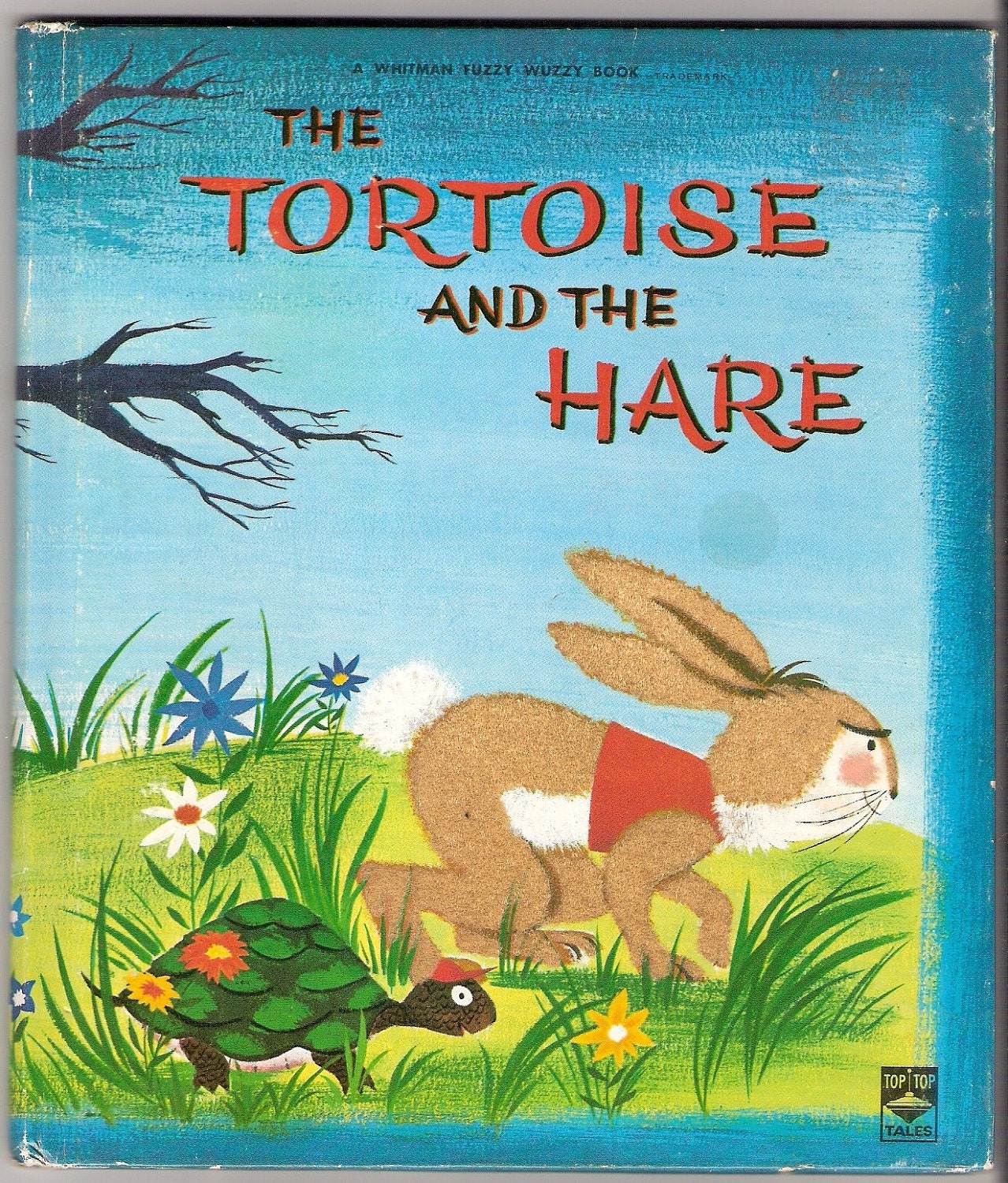
1: AUTHOR: Sierra Swanson
2: TITLE: Text Features for Fictional Texts: FABLES
3: SUBJECT: Literacy
4: GRADE: 3rd Grade
5: CCSS: CCSS.ELA-LITERACY.RL.3.2:Recount stories, including fables, folktales, and myths from diverse cultures; determine the central message, lesson, or moral and explain how it is conveyed through key details in the text.
6: LESSON OBJECTIVE: Students will be able to name different text features of a fictional text, "The Hare and the Tortoise," by creating a personal graphic organizer with the text features.
7: LESSON MATERIALS: "The Tortoise and the Hare" text and student copy, anchor chart paper, markers, construction paper for each student, scissors for each student, writing utensils for each student, six student computers, and exit tickets for each student.
Instructional Lesson Methods and Assessment:
Anticipatory Set:
- To begin the lesson, ask the students if they can name a favorite story of theirs. Then ask the student if that story is a fiction or a non-fiction story.
- Have students name their favorite story and describe the purpose of the story.
- Create a chart on the chart paper with their answers by asking the students to raise their hands if they could answer yes to the following questions about their story:
- Does it have characters?
- Was the story short?
- Was the story long?
- Is there some sort of setting?
- Is there a "theme" in the story?
- Introduce the term FABLE: Brief tales told to point out a moral.
- Explain to the students that a fable is a type of fictional text that has very precise features, that we will be learning about today.
Recognition “What”
Multiple means of Representation
|
Strategic “How”
Multiple means of Action and Expression
|
Affective “Why”
Multiple means of Engagement
|
|
During the set, I will define the term fiction and fable, and the students will be informed that they will be learning about fables, and that they are a type of fictional text.
|
Students will be directed in organizing information that they each provide in the group discussions.
|
Students will be encouraged to participate as a "community" when asked to share what book they like, and encourage each others thoughts.
|
|
Students will be asked to add in their own background knowledge about books and fictional texts.
|
Scaffolding will be presented through prompting questions that help students determine characteristics of their favorite books.
|
Introduce and Model New Knowledge:
- Tell students to be listening and thinking about some features of the story that they think would make it a fiction story.
- Read the story "The Tortoise and the Hare" to the class, as they sit in their desks following along.
- As reading, explain vocabulary terms that may be new or difficult for students to understand.
- After the story is read, ask the students to answer the following questions:
- Was the story long or short?
- Who were the main characters?
- Who won the race, and what caused him to win?
- Can you describe much about the setting?
- What was the moral of the story, and when did you know what the moral was?
- Discuss with the class the features of the story that made them think it was a fictional text, and create a new chart.
- Inform students the five main features of a fable, and create a new and final anchor chart:
- Short Length
- Animal Characters
- Simple Characters: Strong and Weak, and Wise and Foolish
- Weak Setting
- Theme/moral is found at the ending

Recognition “What”
Multiple means of Representation
|
Strategic “How”
Multiple means of Action and Expression
|
Affective “Why”
Multiple means of Engagement
|
|
To customize the display of information,
I will provide a chart for students to
visualize the information that they
are discussing and learning about.
|
Students will be given the correct information
by the teacher, and will be engaged in an
interactive discussion of the features of fables,
and will be helping the teacher point out the
information.
|
Students will be working as a collaborated
group in assisting in creating an anchor
chart for the classroom.
|
|
The students' information processing will be
guided through direct sequencing of information
of the five features of a fable.
|
Guided Practice:
- Have the students work in their "table group."
- Instruct the students to create a short four-six page PowerPoint presentation explaining why the story "The Tortoise and the Hare" fit the guidelines of a fable.

Recognition “What”
Multiple means of Representation
|
Strategic “How”
Multiple means of Action and Expression
|
Affective “Why”
Multiple means of Engagement
|
|
Students will be given the opportunity to work
with a computer as a group to create a visual
example of the reasons why "The Tortoise and
the Hare" fit into the fable genre.
|
Students will use PowerPoint to create a
presentation.
|
Students will be given choice in how they want
to portray their presentation and incorporate the
different features of the story.
|
|
Students will bring out the relationship of the text
features and make the connection to the features
of the fable genre.
|
The students will be given the option to
incorporate images and clips into their short
presentation.
|
Independent Practice:
- Students will be given a piece of construction paper, scissors, and writing utensils.
- Instruct the students that they will be creating a graphic organizer, individually, about the five features of a fable.
- STEPS:
- Fold the construction paper into the "double door" fold.
- Cut three horizontal sections on the front folds
- Write the main points on the different outer folds
- Write the reasoning behind the flap

Recognition “What”
Multiple means of Representation
|
Strategic “How”
Multiple means of Action and Expression
|
Affective “Why”
Multiple means of Engagement
|
|
Students will be using their memory of the
features of a fable and be expected to recall
three-five out of the five.
|
Through the interaction of paper, scissors,
and writing utensils, students will create an
their own graphic organizer.
|
This will be done, through allowing individual
work, and allowing students to express their
new learned information on their own.
|
|
Anchor charts will be placed around the
classroom for students who need extra
scaffolding when recalling the different
features.
|
Through the graphic organizer, students will be
self-assessing and self-reflecting on their knowledge
of the features of a fable.
|
Wrap-up:
- To wrap-up the lesson, I will draw one group stick.
- Then that group will present their PowerPoint presentation that they created to the class.
- To conclude the presentation and lesson, we will look back at our final anchor chart and review the five features
of a fable.
Recognition “What”
Multiple means of Representation
|
Strategic “How”
Multiple means of Action and Expression
|
Affective “Why”
Multiple means of Engagement
|
|
Students will be presenting a PowerPoint
presentation, and then after we will be referring
to the anchor charts.
|
Students will personally be interacting with the
different technology to present their PowerPoint
presentations to the entire class.
|
Students thoughts will be shown valuable as they
present their presentations.
|
|
The students will be using technology and visuals
to help teach each other the relationship of
"The Tortoise and the Hare" and the features
of a fable.
|
Students will be "teaching" their classmates, and
will be given positive and encouraging feedback.
|
Assessment:
- To assess the students, give the students a tortoise or hare "exit ticket.
- Ask the students to write down at least three out of the five, or all five of the features that designate a fable as a fable.
- Once the students are done, the students will turn in their "exit ticket" to me.
- For my students that have difficulty writing, I will have them also verbally tell me the features in case they were unable to write
the information in clarity.

Recognition “What”
Multiple means of Representation
|
Strategic “How”
Multiple means of Action and Expression
|
Affective “Why”
Multiple means of Engagement
|
|
Students with difficulty writing down the
features due to visual disabilities, I will have the
student verbally explain what they know about
the features to me.
|
"Exit Tickets" will be given and writing
utensils will also be given, for students recalling
of the five features.
|
Students will be portraying their understanding
of the lesson objective.
|
|
Students will be defining the features of a fable
in their own words.
|
The assessment will be given as a tool to
monitor the progress and understanding of the
features of fables.
|
The students will be asked to name at least
three of the features of a fable, and will be
encouraged to reach out and be challenged to
list all five features.
|
Brain Network
|
UDL Principle
| |||
Recognition Networks
“What”
  |
I. Multiple Means of Representation ensures that the Recognition networks of students are supported
Specific UDL Accommodations (1.1 – 3.4)
|
Key Elements
|
Please Put a Check Mark Next To the Ones You Incorporated
|
Where in the project?
(Which Lesson Phase 1-6)
|
||
||
||
Strategic Networks
“How”
 |
II. Multiple Means of Action and Expression ensures that the Strategic networks of students are supported
Specific UDL Accommodations (4.1 – 6.4)
|
Key Elements
|
Please Put a Check Mark Next To the Ones You Incorporated
|
Where in the project?
(Which Lesson Phase 1-6)
|
|
| ||||
|
| ||||
|
| ||||
Affective Networks
“Why”
 |
III. Multiple Means of Engagement ensures that the Affective networks of students are supported
Specific UDL Accommodations (7.1 – 9.3)
|
Key Elements
|
Please Put a Check Mark Next To the Ones You Incorporated
|
Where in the project?
(Which Lesson Phase 1-6)
|
|
| ||||
|
| ||||
|
| ||||
Brain Network
|
UDL Principle
| |||
Recognition Networks
“What”
  |
I. Multiple Means of Representation ensures that the Recognition networks of students are supported
Specific UDL Accommodations (1.1 – 3.4)
|
Key Elements
|
Please Put a Check Mark Next To the Ones You Incorporated
|
Where in the project?
(Which Lesson Phase 1-6)
|
|
| ||||
|
| ||||
|
| ||||
Strategic Networks
“How”
 |
II. Multiple Means of Action and Expression ensures that the Strategic networks of students are supported
Specific UDL Accommodations (4.1 – 6.4)
|
Key Elements
|
Please Put a Check Mark Next To the Ones You Incorporated
|
Where in the project?
(Which Lesson Phase 1-6)
|
|
| ||||
|
| ||||
|
| ||||
Affective Networks
“Why”
 |
III. Multiple Means of Engagement ensures that the Affective networks of students are supported
Specific UDL Accommodations (7.1 – 9.3)
|
Key Elements
|
Please Put a Check Mark Next To the Ones You Incorporated
|
Where in the project?
(Which Lesson Phase 1-6)
|
|
| ||||
|
| ||||
|
| ||||

No comments:
Post a Comment